
New Customer Hours
Mon - Sat: 9:00am - 5:00pm
Customer Care Hours
Mon - Sat: 9:00am - 5:00pm

Starting electric service in a new home usually comes with an extra cost — the deposit. For a lot of homeowners, that means handing over a few hundred bucks just to get power turned on. While it’s there to protect utility companies, it can be a frustrating expense when you’re already juggling moving costs.
Going with a no-deposit electricity plan takes that burden off your plate. Instead of parking your money in a security deposit, you can use it for more immediate expenses like groceries, rent, or your first electricity bill. It’s a simple way to save money right away. And if you’re focused on energy saving or just want a more cost-effective way to handle your home energy, skipping the deposit is a solid starting point.
This article lays out how no-deposit plans work, how they help cut energy costs from day one, and what homeowners should know before making the switch. Whether you’re trying to keep utility bills in check or just want a money-saving setup without surprises, we’ll show you how to make the move and why it makes sense.
Why Traditional Electricity Deposits Cost More Than You Think
Most traditional electricity providers ask for an upfront deposit before starting service, especially if your credit check doesn’t meet their standards. The deposit amount usually depends on your past energy usage or estimated electricity usage going forward. That can easily mean paying the equivalent of one or two full electricity bills before you’ve even used any power.
For many households, that upfront cost runs between $150 and $300. And while you might eventually get it back, there’s no promise. Some providers hang onto it for months, apply it to your final electricity bill, or deduct fees before returning what’s left — if anything.
Now imagine you’re hit with a $200 deposit. That’s $200 you can’t use on current energy costs, groceries, or other bills, which is far from ideal when money’s tight. But with a deposit-free plan, that cash stays in your hands. And here’s how you could actually put it to use:
- Buy a smart thermostat to help cut future energy usage. One small home improvement can lead to serious utility bill savings over time.
- Cover essentials like groceries or gas. A big help when you’re moving or setting up a new place.
- Start an emergency fund. Better to have that money available than locked in the energy market for months.
- Apply it directly to your first real energy charges. You’re paying for actual electricity usage, not a placeholder.
In the end, skipping the deposit gives you more room to manage your energy costs and other expenses from day one.
How Going Deposit‑Free Supercharges Your First Month of Savings
Choosing a no-deposit electricity plan isn’t just convenient — it can give your budget an instant boost. By skipping the upfront payment, you unlock immediate financial benefits that help you start strong in your first month of service.
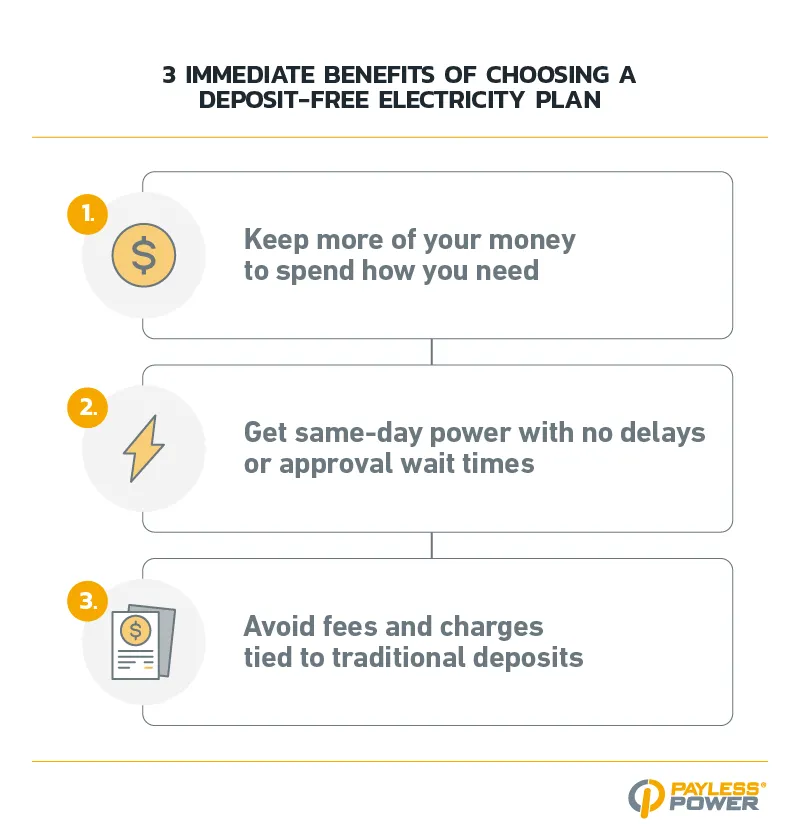
- You keep more of your money to spend how you need
- You get same-day power with no delays or approval wait times
- You avoid fees and charges tied to traditional deposits
It’s a simple switch that gives you breathing room in month one and sets the tone for long-term savings on home energy.
What Drains Your Energy the Most—and How Deposit‑Free Plans Help You Spot It
Ever wonder what’s really pushing up your electricity bill? For most Texas households, the top energy drains are the usual suspects: air conditioning systems, hot water, washing machines and dryers, and old light bulbs. These appliances make up a big chunk of monthly electricity usage, and unless you’re paying attention, it’s easy to overlook how much energy they’re burning through.
That’s where deposit-free prepaid plans come in. Since you’re actively managing your electricity usage and monitoring your account in real time, you’re more likely to notice sudden spikes and adjust right away. You’re not waiting around for a surprise bill — you’re staying on top of your energy consumption every day. That kind of awareness builds better home energy habits.
Here’s a quick breakdown of how much energy typical appliances use each month in a Texas home, and how you can cut back:
|
Appliance |
Approximate monthly kWh usage |
Saving potential |
|---|---|---|
|
HVAC (air conditioner/heating) |
200–500+ kWh |
Adjust your thermostat with the seasons to reduce heating and cooling costs. |
|
Water heater |
70–200 kWh |
Lower the temp or wrap the tank with insulation. |
|
Washer/dryer |
50–100 kWh |
Run only full loads when washing clothes. |
|
Lighting (old incandescent bulbs) |
60–120 kWh |
Switch to LED energy saver bulbs to cut down usage fast. |
Knowing how each appliance affects your overall energy usage lets you make smart, targeted changes. And with a deposit-free setup, you’ve got more room in your budget to invest in energy efficiency upgrades that actually help reduce electricity usage long-term.
How a Deposit‑Free Model Works (Step‑by‑Step)
Getting started with a deposit-free electricity plan is simple, especially in Texas, where prepaid energy plans are easy to find thanks to the state’s deregulated market. Instead of tying up money in a deposit, you pay only for the electricity you actually use, measured by the kilowatt-hour. It’s a pay-as-you-go system that puts you in charge right from the start.
Here’s how to enroll in a no-deposit prepaid electricity plan:
- Find a prepaid electricity provider in your area. Look for a Texas electricity provider that offers prepaid energy plans and compare what’s available near you.
- Pick your plan and enroll online or by phone. Signing up is fast — most electricity providers don’t require a credit check or a long-term contract.
- Add an initial balance to your account. This isn’t a deposit. It’s actual credit you’ll use to pay for your kilowatt-hour usage immediately.
- Set up alerts to track usage and balance. Many prepaid electricity providers send daily texts or mobile app updates so you can stay on top of energy consumption.
- Top up your account when your balance gets low. Use a mobile app, credit or debit card, or third-party services to add funds and keep your electric service going.
This pay-as-you-go setup gives you full control over how much you spend and how much energy you use, all without hidden fees or the credit checks that come with traditional electricity plans.
Best Practices to Maximize Your Savings in Month One
Once you’re signed up for a deposit-free, pay-as-you-go electricity plan, the best way to save money right away is by making smart choices with your energy use. A few simple changes in your daily routine and some light home improvement can make a noticeable difference in your electricity bill, especially in that first month.
Here are some energy saving tips to boost energy efficiency from the start:
- Set your thermostat with intention. A programmable thermostat helps keep your home comfortable without wasting energy when you’re asleep or not home.
- Wash full loads in cold water. Your washer uses less energy this way — and if you air-dry your clothes, you’ll save even more.
- Upgrade to LED lighting. Whether it’s indoor fixtures or outdoor lighting, LED bulbs use far less energy and last much longer than old-school options.
- Use power strips for electronics. TVs, game consoles, and chargers still draw power when not in use. Plug them into a power strip and shut it off when you’re done.
- Time it right. Run high-energy appliances like your clothes dryer or dishwasher during off-peak, time-of-use windows when electricity is cheaper.
- Do a quick DIY energy check. Look for things like drafts, outdated appliances, or poor insulation — common issues that drive up your electricity use.
- Think about the long run. If you own your home, consider installing solar panels or other renewable energy upgrades. They cost more upfront but pay off over time.
These easy moves help keep your electricity bill in check without cutting comfort. The more aware you are of how and when you use power, the more you’ll save starting from month one.
Are There Any Trade‑Offs You Should Know About?
Going deposit-free puts money back in your pocket and helps you start saving right away, but it’s not a set-it-and-forget-it option. While you avoid deposits and late fees tied to traditional billing, prepaid accounts require more day-to-day attention to avoid surprise disconnection or rising energy costs.
One thing to watch is that many prepaid electricity plans use a variable-rate pricing model. That means your electricity rates can shift depending on market demand, especially during extreme weather or high-usage months. If you’re not keeping an eye on your usage or account balance, your costs can climb without much notice.
Here’s what to know before you dive in:
- You’re in control, but that means staying on top of things. If your prepaid account runs out, your electric service stops until you top up. Low-balance alerts and regular check-ins help you avoid disconnection.
- Rates may spike during peak times. Unlike fixed-rate plans, variable-rate pricing can lead to higher per-kilowatt-hour costs during high-demand periods.
- Savings still come down to your habits. Even with a deposit-free plan, the best way to save money on your electricity bill is by managing home energy wisely — sealing leaks, using power strips, or upgrading old appliances.
Bottom line: the trade-off for flexibility is staying involved. But if you’re proactive, prepaid electricity can be a cost-effective way to manage your energy costs without locking up cash in a deposit.

Start Saving From Day One
When you choose a deposit-free electricity plan, you keep your upfront cash, giving you a financial edge before your first energy bill even shows up. That money can go toward real savings, like buying a smart thermostat, swapping old bulbs for LEDs, or just giving your monthly budget some breathing room.
It’s also a simple way to build smarter energy habits. Tracking your electricity usage daily helps you catch waste, make quick changes, and save money on electricity every month. Instead of scrambling when the bill hits, you’re already ahead — and that kind of routine leads to long-term energy saving and better control over your energy costs.
Ready to make the switch to predictable billing and smarter spending? Enroll with Payless Power today and start saving from day one.
Frequently Asked Questions
Thinking about switching to a deposit-free electricity plan? Here are answers to the most common questions homeowners have about how these plans work, how much you can save, and what to expect once you make the switch.
What is a deposit‑free electricity plan?
A deposit-free electricity plan means you don’t pay a large upfront deposit to start service — a common requirement with traditional plans. Instead, prepaid energy plans let you fund your account with a balance you actually use toward electricity. With a no deposit setup, your electric company gives you the flexibility to pay as you go, without locking away your cash.
How much can I save in the first month by avoiding a deposit?
Most traditional plans require a deposit of $150–$300, depending on credit history or usage estimates. By skipping that, you save money immediately and can apply it toward your first electricity bill, essential household expenses, or energy-efficient upgrades. That makes deposit-free plans a cost-effective and money-saving choice for many households.
Does skipping the deposit affect my electricity rate?
Sometimes, yes, electricity rates on prepaid accounts can be slightly higher than traditional fixed-rate plans. However, if you manage your electricity usage closely, the difference in energy costs can be offset by the upfront savings and ability to control your consumption day by day.
Am I at greater risk of disconnection with a deposit‑free plan?
Because you’re paying ahead, you do need to keep your prepaid electricity account funded to avoid disconnection. Most providers offer balance alerts via text or app, so you’ll know when to add funds. As long as you stay on top of your electric service usage and balance, maintaining service is simple.
How do I start with a deposit‑free provider?
It’s easy to enroll with a deposit-free energy provider. Just choose an electric company in your area that offers prepaid plans, check availability in your ZIP code, and sign up online. You’ll add funds to your account, track how much electricity you use daily, and monitor electricity usage through alerts or a mobile app.
Payless Power is a thought leader in the energy industry, focusing on technology, innovation, and accessibility. The company's expertise includes the Texas energy grid, infrastructure improvements, weatherization safeguards, and the advancement of clean, renewable resources. Since 2005, Payless Power has provided energy solutions to residences and businesses across the Lone Star state.
Related Posts
- What is a Smart Meter?
-
 How Tidal Energy Works and Its Potential as a Renewable Energy Source
-
 Hydrogen Fuel Cells: The Advantages and Challenges
-
 The Impact of Electric Vehicles on the Power Grid
-
 The Impact of Energy Efficiency on Urban Sustainability
-
 The Promise of Geothermal Energy: An Underutilized Resource?
What our customers are saying
See why our power customers say we're the best electricity provider in Texas!

I was worried about getting electricity for my home through a prepaid company. I was calling around to see different rates then going through all the hassle of credit checks while dropping points each…
I have been with this company for several years and have been very happy since. Even when I moved, they made my usually stressful situation very easy and carefree. I recommend them to everyone that I…
I have enjoyed the service for 2 years now. In the beginning this service was planned to be temporary but with the service being so effective for me i decided to keep it for the long haul. I’m a happy customer.
About Payless Power
Payless Power wants to be your Texas electric company.
Whether you live in a large city or small town, Payless Power can save you money on your Texas electricity. We serve customers in over 400 deregulated communities in Texas with both traditional, postpaid plans on monthly billing cycles, and prepaid electricity that is pay-as-you-go with no deposit or credit check required.
We work with principal utilities throughout the state to provide electricity. The utilities are: Oncor in the Dallas and Fort Worth Metroplex and various parts of West Texas; CenterPoint Energy in Houston and the surrounding areas; AEP Central in Corpus Christi and surrounding areas; and AEP North in Abilene and other North Texas communities.